
When a garage door spring snaps, the system immediately loses its ability to counterbalance the door’s heavy weight. Torsion and extension springs provide the force needed to lift and lower the door smoothly. When one fails, emergency garage door repair is often required to prevent further damage and safety risks.
Without a working spring, the full weight of the door, often several hundred pounds, is no longer supported. This makes the door extremely difficult, if not impossible, to lift by hand and places excessive strain on the opener. Operating the door in this condition is unsafe; prompt professional service is essential to restore proper operation.
What Happens When a Garage Door Spring Breaks
The springs are the true workhorses of your garage door system, engineered to counterbalance the door’s substantial weight for a smooth operation every time you use it. Both torsion springs, mounted above the door, and extension springs, running along the sides, are designed to store a large amount of energy in their coils. This stored energy is what makes lifting a door weighing hundreds of pounds feel effortless, whether you use an automatic opener or lift it by hand.
When these springs are functioning correctly, they ensure the door moves smoothly and evenly, reducing wear on the garage door opener and other mechanical components. The system is precisely calibrated so the springs do the heavy lifting, allowing the opener to guide the door along its tracks without undue strain.
Without this critical counterbalance, the garage door becomes a dead weight that can cause significant damage or pose a safety hazard. Their role is essential to the safe, efficient operation of your garage door system, making their maintenance a critical part of home care.
Know the immediate actions to take when a garage door spring breaks to protect your home and prevent additional damage by reading: What Should You Do When You Have a Broken Garage Door Spring?
Common Causes of Spring Failure in Akron
The most common reason for spring failure is simply reaching the end of its intended lifespan, as most standard springs are rated for a certain number of open-and-close cycles. Over years of use, the constant winding and unwinding under extreme tension eventually cause the metal to fatigue and break. This is a regular part of the garage door system’s lifecycle.
Another significant factor contributing to premature wear is rust, which can corrode the coils and create weak points that are more susceptible to snapping under pressure. A lack of proper lubrication can also increase friction between the coils, accelerating wear and leading to an unexpected failure.
Several key factors contribute to a spring’s breakdown, including:
- General wear and tear from thousands of cycles
- Corrosion and rust are weakening the steel
- Improper tension or using the wrong types of springs for the door’s weight
Recognize the sudden, loud warning sound that often signals a garage door spring failure by reading: The Loud Bang That Signals a Garage Door Spring Failure.
The Biggest Mistake Homeowners Make After Spring Break
After hearing a loud bang from the garage and discovering the door will not open, the single biggest mistake a homeowner can make is continuing to press the button on their garage door opener. Many assume the opener is strong enough to lift the door on its own, not realizing that the springs do the heavy lifting.
This common mistake can turn a relatively straightforward spring replacement into a more complex and costly issue. Understanding the damage this action can cause will help you protect your garage door system from further harm.
Understand how a broken garage door spring can create serious safety risks for you, your family, and your property by reading: Why a Broken Garage Door Spring Can Put Your Safety at Risk.
Trying to Use the Garage Door With a Broken Spring
Operating your garage door with a broken spring often leads to serious and costly consequences for the entire system. The opener motor is designed to guide the door, not lift its full weight, which is why the springs provide the necessary counterbalance.
When a spring is not functioning, forcing the opener to operate places extreme strain on the motor, increasing the likelihood of failure and reducing the door’s ability to close evenly, which can negatively affect energy efficiency by allowing air leaks and temperature loss.
An unbalanced garage door can also cause structural damage that impacts both performance and insulation. Bent panels, misaligned tracks, and damaged rollers can prevent the door from sealing properly, leading to heat loss and reduced indoor comfort. What may begin as a single spring issue can quickly escalate into a larger system problem that affects safety, repair costs, and overall energy efficiency. Recognizing these risks and avoiding operation until a professional inspection is completed helps protect both your garage door system and your home’s thermal performance.
Understand how selecting energy-efficient doors can reduce heat loss and improve overall building performance by consulting federal resources from the U.S. Department of Energy.
Delaying Professional Repair and Its Consequences
Postponing a call for professional service after spring break can significantly increase the risk of further damage and higher costs in the long run. Even if the garage door is not being used, a broken spring leaves the system unbalanced and unstable, which can lead to additional problems over time. The remaining components are often subjected to unusual stress, which can cause premature wear of parts that were previously in good condition.
A professional inspection can identify not only the broken spring but also any other components that may have been affected or are close to failure. Ignoring the initial problem allows these more minor issues to compound, potentially leading to a complete system breakdown that is far more expensive to fix than a simple spring replacement.
Delaying repairs can result in:
- Damage to the tracks, rollers, and door panels from the unbalanced weight.
- Increased strain on the second spring if you have a two-spring system, causing it to fail sooner.
- The potential for the door to become completely detached from the tracks, requiring a much more extensive repair.
Dangers of DIY Garage Door Spring Repair
While many home improvement projects are suitable for a weekend warrior, garage door spring replacement should be left exclusively to professionals with years of experience. The springs on your garage door are wound under extreme tension to lift hundreds of pounds, and mishandling them without the right tools and proper training can have dire consequences.
A sudden, uncontrolled release of this tension can cause the spring or associated hardware to become dangerous projectiles. This is why attempting this repair yourself is not worth the risk.
Safety Hazards and Injury Risks
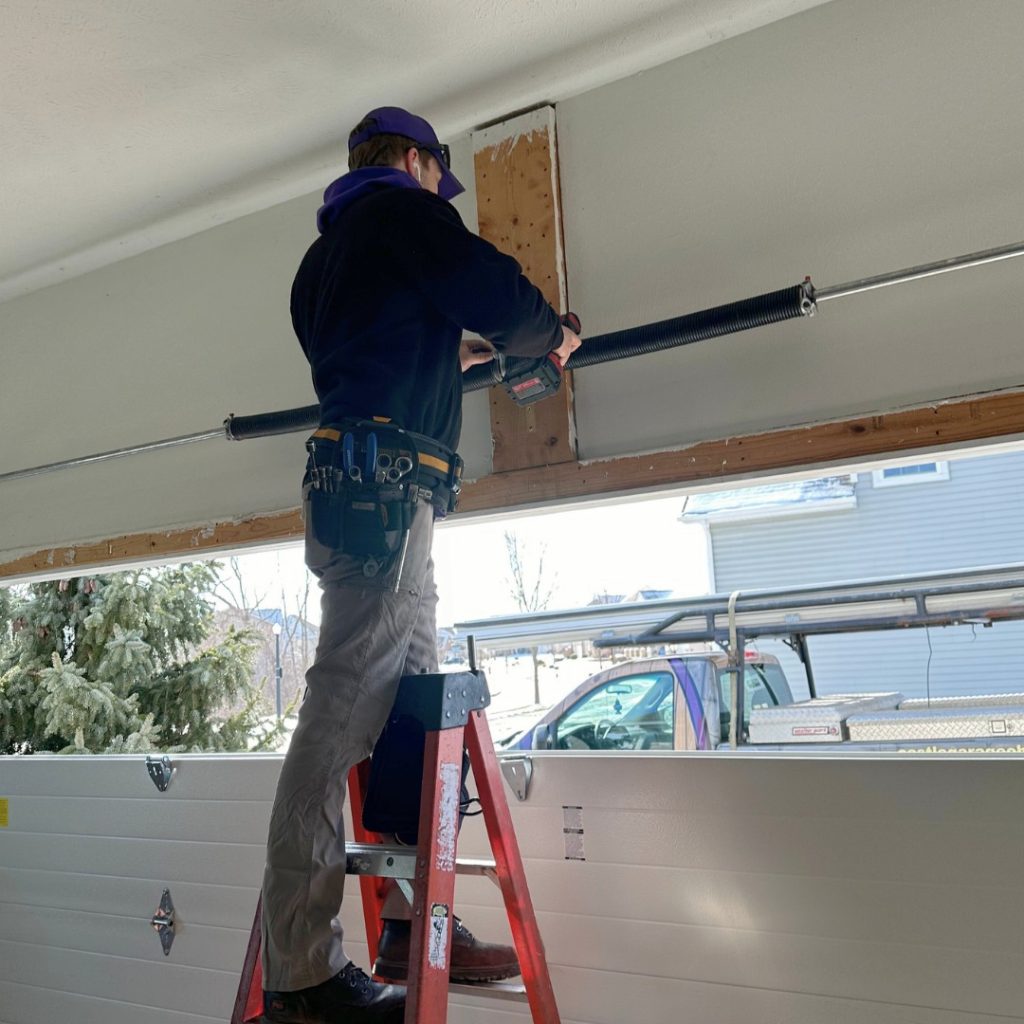
The primary reason to avoid a do-it-yourself spring repair is the significant risk of serious injury due to the extreme tension stored in the coils. These springs are engineered to hold hundreds of pounds of force, and if that energy is released improperly, it can be explosive. The wrong move can cause the spring to snap or send winding bars flying, leading to severe cuts, broken bones, or even head trauma.
Furthermore, installing the wrong spring or failing to balance the door correctly can create new safety hazards, making the door operate unpredictably. Without a functioning spring system, you must also manage the door’s full unsupported weight during the repair, which poses risks of strain or crushing injuries.
Extreme caution is necessary because the dangers are very real, including:
- Injury from tools being thrown under high pressure.
- Lacerations from a snapping spring or cable.
- The door falls suddenly if not adequately secured.
How DIY Attempts Can Lead to More Expensive Repairs
Beyond safety risks, attempting to replace broken garage door springs without professional expertise often leads to more extensive and costly damage to the entire system. Using the wrong tools can strip bolts, damage the torsion tube, or bend brackets, turning what should be a straightforward professional repair into a much larger problem. Even more concerning, installing an incorrectly sized spring can throw the door out of balance and eventually damage or destroy the garage door opener motor.
An unbalanced door will not operate smoothly, placing excessive strain on the opener, tracks, and panels, leading to premature failure of these components. This structural damage can quickly escalate a single problem into a cascade of issues that require a comprehensive, costly garage door service to resolve.
Ultimately, what may have seemed like an opportunity to save some money can result in a much higher bill from a professional who must fix the initial problem and the subsequent damage. Trusting a qualified technician from the start ensures the job is done correctly and safely.
Signs Your Garage Door Spring May Fail Soon
Fortunately, a garage door spring often provides warning signs before it fails, allowing you to address the issue proactively. Paying attention to unusual warning sounds or changes in the door’s movement can alert you to a developing problem.
You may also notice visual clues on the spring itself that indicate it is under strain and nearing the end of its lifespan. Recognizing these signs is key to preventing an unexpected and inconvenient breakdown.
Warning Sounds and Door Movement Issues
One of the most telling indicators of a failing spring is a change in the sounds your garage door makes during operation. If you hear grinding or squeaking, it may indicate increased friction as the spring coils struggle to move smoothly. The most dramatic sound is a loud bang, which almost always signals that a spring has just snapped under pressure.
You should also pay close attention to the door’s movement, as an imbalanced or failing spring will affect the smooth operation you are used to. A door that appears crooked as it opens, moves slowly, or gets stuck partway up is exhibiting classic symptoms of a spring problem. The garage door opener may also sound like it is straining to lift the door.
Common warning signs related to sound and movement include:
- A sudden, loud snapping or banging sound.
- The door opens only a few inches before stopping.
- The door appeared lopsided during movement.
Review educational materials that support proper installation, maintenance, and compliance by consulting member-driven resources from the International Door Association.
Visual Clues That Signal a Problem
A quick visual inspection of your garage door springs can often reveal clear evidence of a problem long before a complete failure occurs. For a torsion spring mounted above the door, the most obvious sign of failure is a visible gap in the coil, typically a couple of inches wide, where the metal has snapped apart. If you have extension springs on the side of the door, you may notice one is stretched more than the other.
Another crucial visual cue is rust on the garage door springs, as corrosion weakens the steel and is a common cause of premature wear. Even if the spring is not broken, significant rust indicates it is not in good condition and may fail soon.
Checking your springs periodically for these signs can help you anticipate when a replacement is needed. When you suspect an issue, contacting a professional for an inspection can confirm whether the spring needs immediate attention to prevent a sudden breakdown.
Reliable Garage Door Spring Solutions
Understanding the implications of a broken garage door spring is crucial for homeowners. Operating a garage door with a compromised spring can cause significant safety risks and further damage. Therefore, it is imperative to address any signs of spring failure promptly to prevent further damage. Furthermore, enlisting the help of a professional ensures that necessary repairs are completed safely and effectively. Taking immediate action not only safeguards your home but also provides peace of mind as you navigate the challenges of maintenance.
Castle Garage Doors provides professional garage door services delivered by technicians trained to meet high industry standards. Comprehensive training prepares each technician to handle installation, repair, and safety requirements with precision. Manufacturer-recommended practices are followed to ensure durability and proper function. Continued learning supports consistent workmanship and dependable service.
Contact us today or give us a call for quality garage door service and installation.